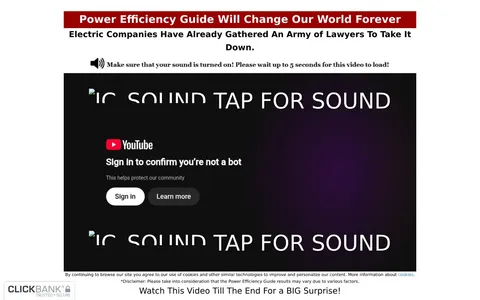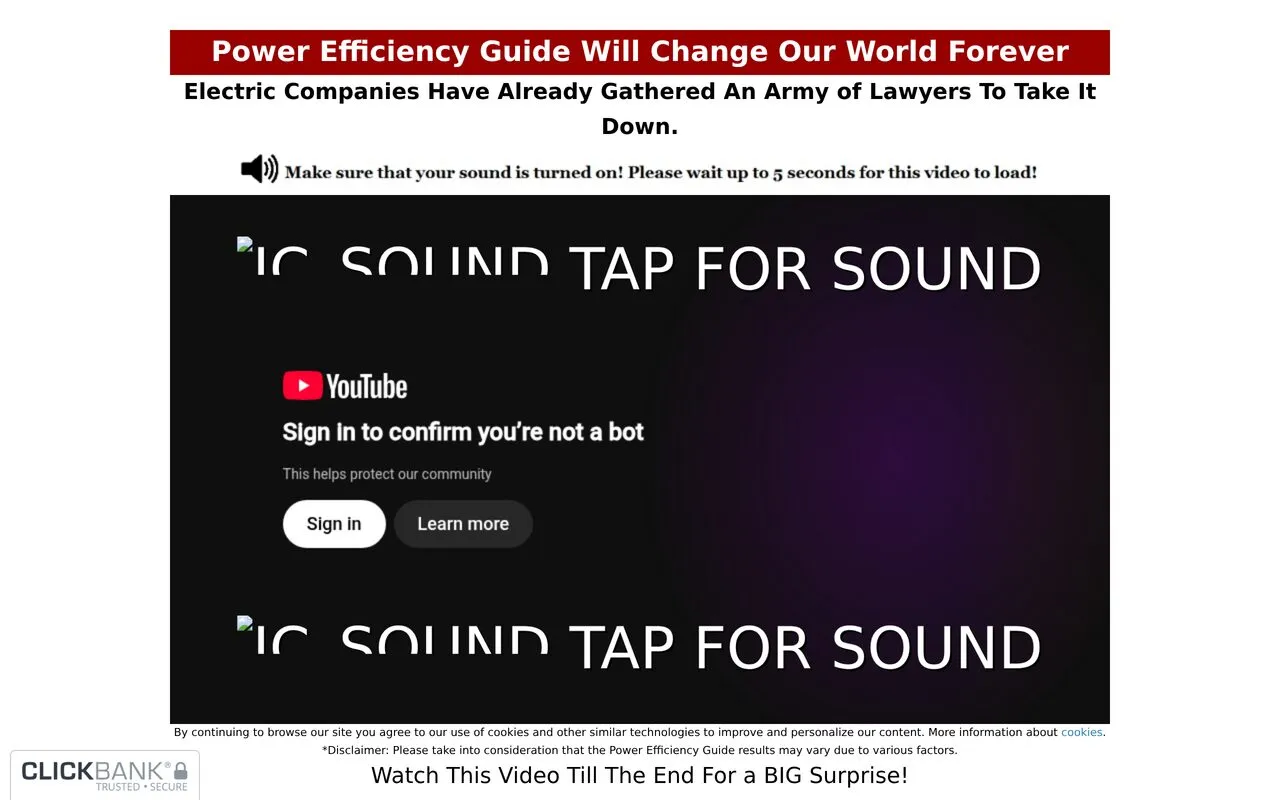
The Power Efficiency Guide sales page, captured 2026-09-23
Power Efficiency Guide review
A DIY plan for making some of your own electricity, aimed at cutting the power bill
By the RJ Editorial Team. Sales page checked 2026-09-23. Last updated 2026-09-23.
Is it worth it?
You open the electricity bill, see a number bigger than last quarter, and something in you goes tight. Nothing in the house changed. You already turned things off. So when a page tells you a guy worked out how to build his own power and the electric companies want it buried, part of you wants that to be true. Here is what the page actually is. A long video (there's a text version linked) built around an anonymous author writing as Mark Edwards, with a story about lawyers and suppressed technology. That framing is the seller's, not evidence. What's more telling is the small print at the bottom, in the seller's own words: the product is an experiment, it was not technically assessed, and it was never produced at any scale. They also warn that some of the home alterations may be illegal where you live and that checking with your local authority is on you. That matters, because this isn't selling you a new way of thinking about your bill. It's selling a physical device that's supposed to make electricity. On that, the page offers no test data, no output figures, no independent check, and it says as much itself. If you enjoy workshop projects and want a curiosity read for the price of a takeaway, fine. If you're buying because the bill is genuinely hurting, your money does more in a draught-proofing kit, an energy monitor or your utility's efficiency scheme.
Pros
- One off payment, nothing recurring
- Instant download, you can read it the same night
- Bought through ClickBank, so there is a refund route
- Cheap enough to treat as a curiosity
Cons
- Page never states the price, length or file format
- Seller's own small print says the device was never tested or produced
- No output figures, no independent verification, and some builds may not be legal where you live
What you get
A digital download you read on a phone or laptop, pitched as plans for building a small power device at home. The page never says the page count, the file format, what parts you would need to source, or which tools the build takes. There is no printed copy offered and no software. Before buying, all you see is a video or the same pitch as text.
Before you buy
- Look at the price and the refund terms at checkout first (ClickBank's standard window is 60 days, but confirm it on the refunds page)
- Ask what the parts list actually is, since the page does not show it, and work out if you have the tools and space
- Check your local rules on home electrical work, and never connect anything to your house supply yourself
Who it suits
Hobbyists who like a DIY power project and don't mind if it goes nowhere. If you're counting on it to cut the bill, probably not worth it.
Related products
Energy Revolution System
DIY plans claiming to cut your power bill, sold with the seller's own untested warning

Septifix Septic Tank Treatment Tablets
A monthly tablet you flush, aimed at septic tank smells, sludge and slow drainage
EZ Battery Reconditioning
Reviving old lead acid batteries yourself instead of paying for new ones.
Last Battery
A DIY battery guide that claims it can wipe out your electricity bill
Orgone Energy Motor
Pitches a home built free energy motor as a way to cut your power bill. No evidence offered.
Power Grid Generator
Aimed at people worried about blackouts who want backup power they control themselves.